
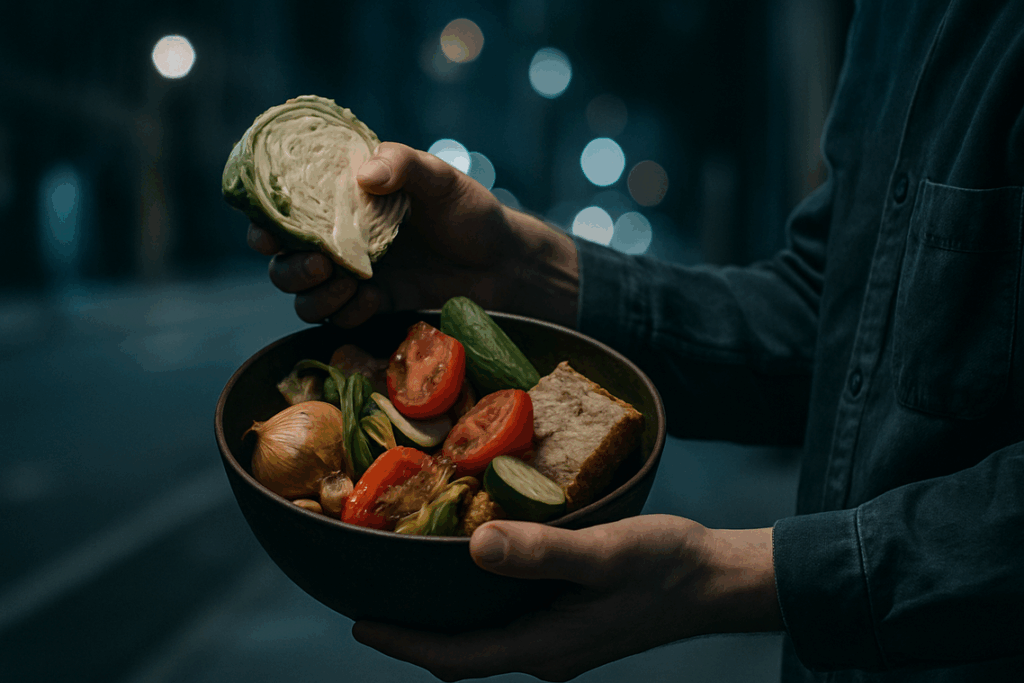
If you’re looking to build healthier routines in the kitchen while making choices that are better for the planet, you’re in the right place. More home cooks are embracing sustainable eating habits—but with so much conflicting advice online, it can be hard to know where to start or what truly makes a difference.
This article is designed to cut through the noise. We’ll break down what sustainable food choices actually look like in everyday cooking, from ingredient selection and seasonal planning to reducing waste and maximizing flavor. Whether you’re a seasoned home chef or just getting comfortable in your kitchen, you’ll find practical, realistic strategies you can apply immediately.
To ensure accuracy and relevance, we’ve drawn on insights from culinary professionals, nutrition research, and current food sustainability data. The goal is simple: give you clear, trustworthy guidance that helps you cook smarter, waste less, and create meals that are as responsible as they are delicious.
Start With Your Plate
Ever wonder whether what fuels your body also fuels climate change? You are not alone. Between buzzwords like food miles and carbon footprint, it is easy to freeze in the grocery aisle. However, sustainable eating habits do not require a total pantry overhaul.
First, prioritize plants: beans, lentils, seasonal vegetables. The EAT-Lancet Commission links plant-forward diets to lower emissions and better heart health. Next, shop local when possible; shorter supply chains often mean fewer transport emissions, according to the FAO. Then, treat meat as a flavor accent, not the star (think stir-fry, not steakhouse).
Finally, plan meals to cut waste; the EPA estimates food waste is a major methane source. With these simple kitchen shifts, you can cook smarter tonight.
The Food-Health-Planet Connection: Why Your Diet Matters More Than Ever
By incorporating sustainable eating practices into your kitchen routine, you can not only benefit the planet but also discover how efficient meal prep strategies can save you time during those hectic weeknights – for more details, check out our Time-Saving Meal Prep Strategies for Busy Weeknights.
First, let’s connect the dots. Modern agriculture isn’t just about putting food on your plate—it shapes water systems, soil health, air quality, and ultimately, your body. Industrial livestock alone accounts for about 14.5% of global greenhouse gas emissions (FAO), largely from methane. Meanwhile, producing one pound of beef can require nearly 1,800 gallons of water (Water Footprint Network). That’s not just a statistic—it’s a reminder that dinner has a footprint.
At the same time, diets high in ultra-processed foods and red meat are linked to higher risks of heart disease, type 2 diabetes, and certain cancers (WHO; Harvard T.H. Chan School of Public Health). In contrast, whole-food, plant-rich patterns—think lentils, leafy greens, whole grains—are associated with longer lifespans and lower inflammation. In other words, what’s good for the planet often doubles as a long-term health investment (a rare win-win).
However, critics argue individual choices barely dent global emissions. It’s true systemic change matters. Yet consumer demand shapes supply chains. When more people adopt sustainable eating habits, markets shift—just look at the rapid growth of plant-based options.
Ultimately, choosing diverse crops over monocultures helps protect biodiversity, conserve soil, and nourish your body. Small shifts, multiplied, become powerful leverage.
Principle 1: Mastering the Plant-Forward Plate
A few years ago, I tried going fully vegan overnight. It lasted nine days (turns out, cravings are persuasive). What finally worked wasn’t restriction—it was reframing. Plant-forward means prioritizing plants while leaving room for flexibility. It’s abundance over avoidance, color over calorie-counting. Instead of asking, “What am I cutting?” ask, “What can I add?”
Some argue that if you’re not strictly vegan, you’re not committed. I get that perspective. But for most home cooks, an all-or-nothing mindset backfires. Research from Oxford’s Our World in Data shows even reducing meat intake significantly lowers environmental impact. Progress beats perfection.
The Flavor-First Swap
| Classic Dish | Plant-Forward Upgrade |
|---|---|
| Beef Bolognese | Lentil Bolognese |
| Ground Beef Tacos | Mushroom & Walnut Tacos |
| Butter Chicken | Chickpea Curry |
The key is umami—that savory depth that makes food satisfying. Roast mushrooms until browned (not steamed), caramelize onions low and slow, and add soy sauce or nutritional yeast for complexity. Texture matters too: toasted walnuts or crispy chickpeas mimic the bite people miss.
Home Kitchen Hack: Try “Meatless Mondays” or a 50/50 plant-to-animal protein ratio during the week. This “flexitarian” approach supports sustainable eating habits without overwhelming your routine.
Pro tip: Season generously. Plants are flavor sponges (and bland food converts no one).
Principle 2: The Zero-Waste Kitchen Philosophy
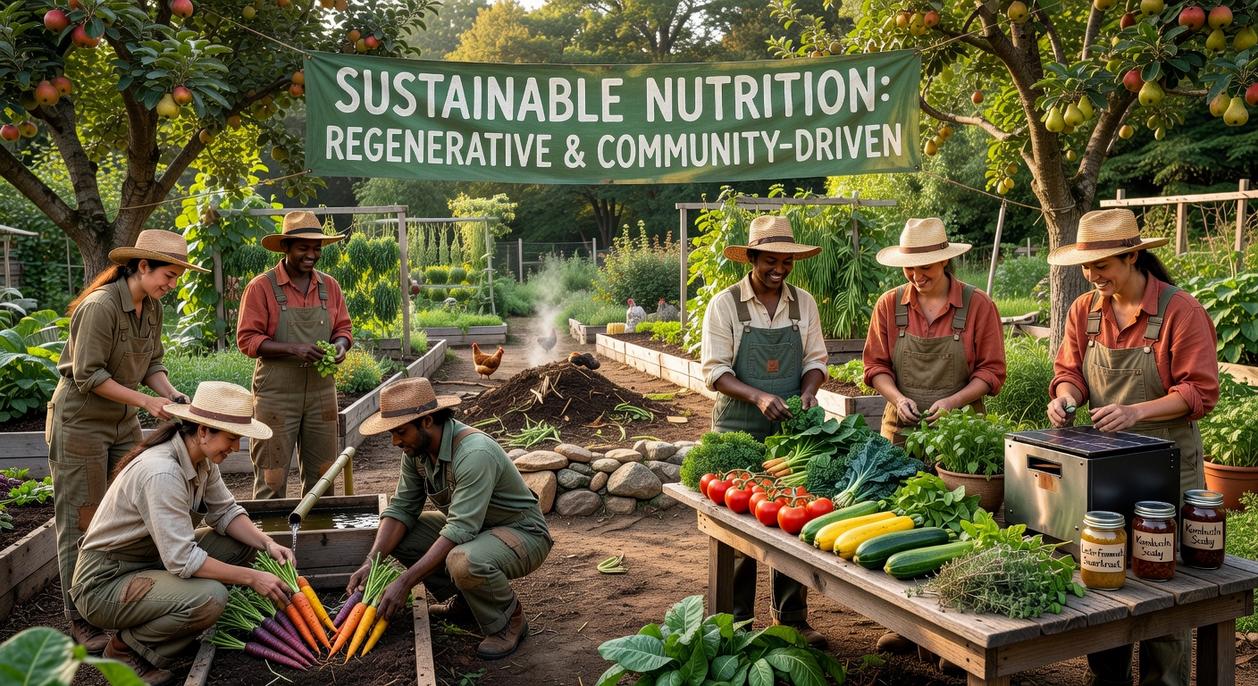
The average household wastes nearly 30–40% of its food supply, according to the USDA. Globally, food waste contributes about 8–10% of greenhouse gas emissions, largely from methane released in landfills (UNEP, 2021). That’s not just leftovers—it’s flavor, money, and resources tossed in the trash.
Some argue food waste is unavoidable (life gets busy). True. But a zero-waste kitchen isn’t about perfection—it’s about intention.
Cooking Tip: Root-to-Stem Eating
Before you trim and toss, consider this:
- Broccoli stems → Peel and shred into slaw or stir-fries.
- Carrot tops → Blend into pesto with nuts, garlic, and olive oil.
- Potato peels → Toss with salt and roast into crisps.
- Beet greens → Sauté like Swiss chard.
These “scraps” add texture, nutrients, and depth (and stretch your grocery budget).
Home Kitchen Hack: Smart Storage
Store herbs like a bouquet—trim stems, place in water, and loosely cover. Keep leafy greens in the high-humidity crisper; fruits prefer low humidity. Pro tip: Line containers with paper towels to absorb excess moisture and slow spoilage.
Flavor Profile Focus: Scrap Stock
Collect onion skins, celery ends, mushroom stems, and herb stalks in a freezer bag. Simmer with water for 45 minutes. The result? A golden, umami-rich base for soups and sauces—completely free.
This approach mirrors the top global food trends shaping modern kitchens and supports sustainable eating habits without sacrificing flavor.
Principle 3: Sourcing Smarter, Not Harder
Decoding “Local” and “Seasonal”
First, let’s clarify terms. Local means food grown near you; seasonal means harvested at its natural peak. Surprisingly, seasonal often matters more. A UK study found heated greenhouse tomatoes can create up to 10 times more emissions than field-grown seasonal ones (Carbon Trust). So yes, that January strawberry might be the real villain. Check a seasonal food guide like https://www.seasonalfoodguide.org to plan smarter.
Making an Impact at the Supermarket
Next, make simple swaps: choose fair-trade coffee and chocolate (Fairtrade International reports premiums directly support farmers), buy “ugly” produce to reduce the 30–40% food waste cited by the FAO, and pick items with less plastic.
Understanding Labels
Finally, “Organic” restricts synthetic pesticides (USDA), while “Regenerative Agriculture” focuses on rebuilding soil health. Small choices compound into sustainable eating habits.
Building an eco-friendly diet isn’t about flipping your pantry overnight. It’s about making small, repeatable shifts. If the idea feels overwhelming, that’s normal. Sustainability simply means meeting today’s needs without harming tomorrow’s. In food terms, that translates into three pillars: add more plants, waste less food, and choose mindfully. For example, swap beef for lentil bolognese once this week, or simmer vegetable scraps into “scrap stock.” These sustainable eating habits compound over time. So, instead of chasing perfection, pick one step and start there. Consistency, not intensity, drives lasting change. Progress grows with practice and patience in your kitchen daily.
Bring Better Flavor and Smarter Choices Into Your Kitchen
You came here looking for practical ways to elevate your meals while making smarter food decisions. Now you have the tools, insights, and inspiration to do exactly that.
From understanding flavor profiles to applying simple home kitchen hacks, you’re better equipped to cook with confidence. Most people struggle with making meals that are both exciting and aligned with their sustainable eating habits. That frustration of bland recipes, wasted ingredients, or unhealthy shortcuts doesn’t have to continue.
The next step is simple: start applying one new technique or ingredient you discovered today. Experiment with a gourmet twist on a familiar dish. Plan your week with intention. Make every plate purposeful.
If you’re ready to transform everyday cooking into something inspired, explore more of our expert-backed culinary breakdowns and practical kitchen strategies. Thousands of home cooks trust our guidance to simplify complex flavors and make smart, delicious choices.
Your kitchen is your creative space. Put what you’ve learned into action today and taste the difference for yourself.