

If you’re here, you’re looking for practical, reliable kitchen guidance you can actually use—whether that’s mastering a gourmet dish, understanding flavor pairings, or avoiding common cooking mistakes that sabotage great ingredients. This article delivers exactly that. We break down techniques step by step, explain why certain methods work, and highlight small adjustments that create big improvements in taste and texture.
Our culinary insights are grounded in hands-on testing, classic cooking principles, and expert-backed techniques used in professional kitchens. Every tip, flavor profile, and kitchen hack shared here is designed to be clear, actionable, and adaptable for home cooks at any skill level.
From decoding complex dishes to elevating everyday meals, you’ll find focused, practical advice that helps you cook with more confidence, creativity, and consistency—without unnecessary fluff or complicated jargon.
From Frustration to Flavor: Unlocking Your Kitchen Potential
That “why doesn’t this taste amazing?” feeling usually comes down to a few common cooking mistakes. Recipes aren’t magic spells; they’re frameworks. If your food is bland, you’re likely under-seasoning or not tasting as you go. If textures disappoint, heat control is the culprit—crowded pans steam instead of sear.
Actionable Fixes:
- Salt in layers, not just at the end.
- Preheat pans fully before adding food.
- Rest meat to retain juices.
Pro tip: balance fat, acid, salt, and heat in every dish (think lemon on fried fish). Master these, and improvisation becomes natural.
The Prep Problem: Why a Messy Start Leads to a Messy Finish
There’s a reason professional kitchens run like clockwork. It’s not magic. It’s MISE EN PLACE—a French term meaning “everything in its place.” In practical terms, that means chopping, measuring, and organizing before heat ever touches the pan.
The Error: Starting to cook before all ingredients are prepped (chopped, measured, organized). This is often called a lack of ‘mise en place’.
Research in cognitive psychology shows task-switching increases errors and stress (American Psychological Association). When you’re sautéing onions while scrambling to mince garlic, you split focus—and that’s when onions burn. A 2018 study in Food Quality and Preference also found that rushed preparation negatively affects consistency and perceived taste.
The Consequence: frantic cooking, uneven doneness, overcooked proteins.
The Fix:
• Chop and measure everything first
• Set tools within arm’s reach
Pro Tip: Use small bowls (ramekins) for each ingredient. It feels professional—and eliminates one of the most common cooking mistakes.
Mastering the Flame: The Critical Role of Heat Management
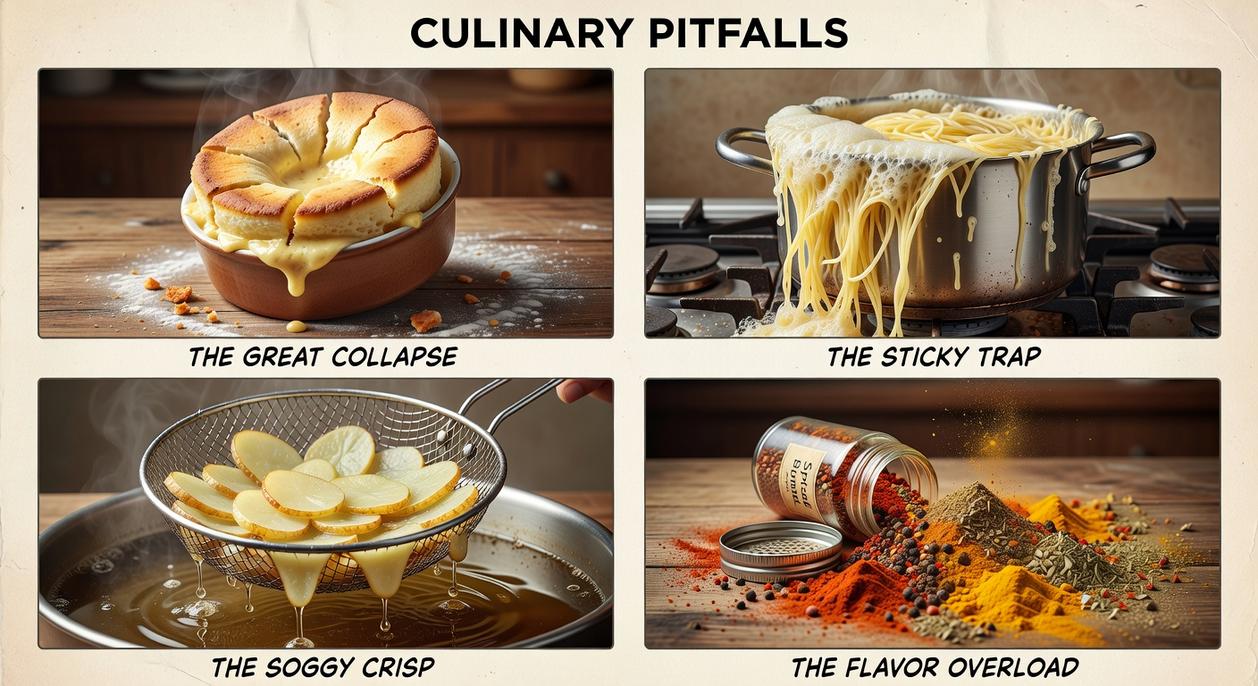
Heat control is the quiet hero of great cooking. Get it right, and you unlock flavor. Get it wrong, and dinner tastes… disappointing (and maybe a little smoky).
Let’s start with the error: using the wrong temperature—either blasting food in a ripping hot pan when it needs gentle heat, or dropping it into a cold pan that steams instead of sears. These are common cooking mistakes that sabotage texture and flavor.
A cold pan causes moisture to pool, leaving meat grey and vegetables limp. Too hot? The exterior burns before the inside cooks through. Think of it like toasting bread on max heat—it chars outside while staying soft within.
Here’s what I recommend:
- For searing: Preheat stainless steel or cast iron first. Then add oil. When the oil shimmers (a visual cue that it’s hot but not smoking), add your food. This triggers the Maillard reaction—the chemical process that creates that deep, savory crust.
- For sautéing: Stick to medium heat. Garlic and onions need gentle cooking to release sweetness without turning bitter.
Pro tip: If your oil smokes aggressively, your pan is too hot—pull it off the heat briefly before adding food.
Master the flame, and you control the flavor profile. That golden crust versus rubbery disappointment? It’s all about heat.
The Seasoning Secret: It’s More Than Just Salt at the End
One of the most common cooking mistakes is treating salt like a final touch instead of a foundational ingredient. The error? Under-seasoning food, or only seasoning at the very end of the cooking process. As a result, dishes taste flat, one-dimensional, and bland. The flavor sits on the surface instead of weaving into every bite.
So what’s the fix? Season in layers. Salt your pasta water (it should taste like the sea, according to Samin Nosrat, Salt, Fat, Acid, Heat). Salt vegetables before roasting to draw out moisture and intensify sweetness. Salt meat before it hits the pan to enhance crust formation through the Maillard reaction—the chemical process that creates deep browning and complex flavor (Harold McGee, On Food and Cooking).
Why Layering Works
Each stage builds a base note. Then, at the end, add acidity—meaning an ingredient like lemon juice or vinegar that brightens flavor. A small splash can make a dish pop without tasting sour (think of it as turning up the contrast on a photo).
Pro tip: Taste constantly. Adjust gradually. If your pantry feels limiting, revisit this beginners guide to stocking a functional kitchen pantry to expand your seasoning arsenal strategically.
Giving Food Space: The Mistake of an Overcrowded Pan
The Error: Trying to cook too much food in a single pan at once. It feels efficient (who wants more dishes?), but it sabotages flavor.
When ingredients are crammed together, moisture gets trapped. Instead of browning, they steam. Browning—also called the Maillard reaction (the chemical process that creates deep, savory flavor when proteins and sugars react under heat)—needs high, dry heat to happen (Harold McGee, On Food and Cooking). Overcrowding drops the pan’s temperature, blocking that reaction and leaving food pale and soggy.
Visual Cue: If pieces are touching or piled up, you’re steaming. You should see the pan surface between them.
The Fix:
- Cook in batches
- Keep pieces in a single layer
- Let the pan reheat between rounds
Yes, it takes longer. But the payoff is crisp, caramelized edges (think steakhouse sear, not sad cafeteria stir-fry).
Prediction (Speculation): As home cooks prioritize texture in 2026, expect more emphasis on smaller-batch cooking and heavier pans that retain heat better.
Pro tip: Pat ingredients dry before they hit the pan.
The Final Step: Let It Rest
The Error: Slicing into meat (steak, roasts, chicken) immediately after it comes off the heat.
When heat cooks protein, muscle fibers tighten and push juices toward the center. Cut too soon, and that flavor floods your board instead of your bite.
Follow this simple plan:
- Remove meat from heat and place on a warm plate.
- Tent loosely with foil (don’t wrap tightly; steam softens crust).
- Wait 5–10 minutes; large roasts need 15–20.
Think of it like letting coffee steep—patience deepens results. Pro tip: Rest time equals one minute per 100 grams.
Your Path to Kitchen Confidence Starts Now
You now have the tools to spot what went wrong and fix it before dinner hits the table. After all, the mystery of why a dish flopped usually comes down to common cooking mistakes not some culinary curse. Instead, focus on preparation, heat, seasoning, and spacing the true difference between decent and dazzling. Granted, recipes matter, but skills matter more. So, pick one habit you know sabotages you and fix it tonight. One small tweak now creates big wins later and yes, that includes finally salting your pasta water. Trust the process.
Bring Every Dish Together with Confidence
You came here to elevate your cooking, understand flavor on a deeper level, and avoid the frustration that ruins great meals. Now you have the insights to refine your techniques, balance flavors with intention, and sidestep common cooking mistakes that hold so many home cooks back.
The difference between an average dish and an unforgettable one often comes down to small, intentional adjustments. When you pay attention to heat control, seasoning layers, texture balance, and timing, your meals transform from routine to remarkable.
Don’t let bland flavors, overcooked proteins, or kitchen guesswork keep you stuck. Start applying these tips in your next meal and taste the improvement immediately.
If you’re ready to cook smarter, avoid common cooking mistakes, and create restaurant-worthy dishes at home, explore more of our expert breakdowns and kitchen hacks today. Join thousands of passionate home cooks who trust our proven techniques—then head to your kitchen and put them into action now.