
If you’ve ever wondered what truly makes great sushi—beyond the beautiful presentation—you’re in the right place. This guide breaks down the essential sushi rice, fresh nori, high‑quality fish for sashimi, and classic components like wasabi, soy sauce, and seasoned rice vinegar that define authentic flavor and texture. We’ll also explore foundational techniques such as precise knife skills, proper rolling, and crafting perfect nigiri and maki so you can understand not just what goes into sushi, but how it all comes together.
Whether you’re looking to order more confidently or recreate your favorite rolls at home, this article is designed to give you clear, practical insight rooted in culinary expertise and hands‑on kitchen experience. We’ve carefully analyzed traditional methods and modern adaptations to ensure you get accurate, up‑to‑date guidance you can trust. By the end, you’ll have a deeper appreciation for sushi’s core elements—and the confidence to apply them yourself.
It All Starts with the Rice: Mastering Shari
In Tokyo’s Tsukiji backstreets, seasoned itamae will tell you the same thing: the fish is the headline, but the rice is the story. Shari—seasoned sushi rice—is the vinegared short-grain foundation that supports every slice of tuna or uni. Without balanced shari, even toro falls flat.
The grain matters most. Japanese short-grain varieties such as Koshihikari contain higher amylopectin starch, which creates the glossy, tender stickiness sushi demands. Medium or long-grain rice? Too dry, too separate.
The Perfect Cook
- Rinse until the water runs clear to remove excess surface starch.
- Soak 30 minutes for even hydration.
- Cook with a 1:1.1 rice-to-water ratio, then steam covered 10 minutes off heat.
Seasoning is everything. Mix ¼ cup rice vinegar, 1 tablespoon sugar, and 1 teaspoon salt—your sushi-zu. While the rice is hot, “cut” the vinegar in using a paddle, slicing and folding to coat each grain without crushing it. Fan as you fold for sheen and lift.
Some argue the fish matters more. But in professional sushi ingredients and techniques circles, rice texture signals mastery first.
For another precision-driven dessert approach, see the art of crafting a restaurant quality chocolate souffle. With care.
The Star of the Show: Sourcing and Preparing Fish
If sushi is a performance, fish is the headliner. Get this wrong, and no amount of fancy plating will save you.
Understanding “Sushi-Grade”
Let’s clear this up: “sushi-grade” isn’t a regulated legal term in many countries. It generally means the fish is extremely fresh, handled carefully, and often previously frozen to kill parasites (per FDA guidance on raw consumption). When talking to your fishmonger, ask:
- Was this fish previously frozen for raw use?
- When was it delivered?
- How has it been stored?
Farmed salmon vs. wild salmon? Farmed is often considered safer for raw prep due to controlled feed and lower parasite risk. Wild offers deeper flavor—but demands stricter handling. (Yes, flavor vs. peace of mind is a real kitchen debate.)
Best Fish for Beginners
Start simple. Compare:
- Bluefin tuna (akami): Lean, clean flavor, firm texture—great for precise slicing.
- Salmon: Buttery, forgiving, widely available.
- Yellowtail (hamachi): Mild and slightly sweet, softer bite.
Salmon is easier to handle; tuna requires cleaner knife work. If you’re new, salmon is your training montage moment.
Home Kitchen Safety
Raw fish demands respect.
- Keep it below 40°F (4°C).
- Use a separate cutting board.
- Store tightly wrapped and use within 24 hours.
Pro tip: Chill your knife before slicing to maintain texture.
The Art of the Slice
Always slice against the grain. The “grain” refers to the direction of muscle fibers; cutting across them shortens fibers and creates that melt-in-your-mouth texture. For nigiri, aim for clean, single strokes. For maki, slightly thinner cuts work best. Sawing back and forth? That’s how you bruise fish (and your ego).
Beyond the Fish: Essential Accompaniments
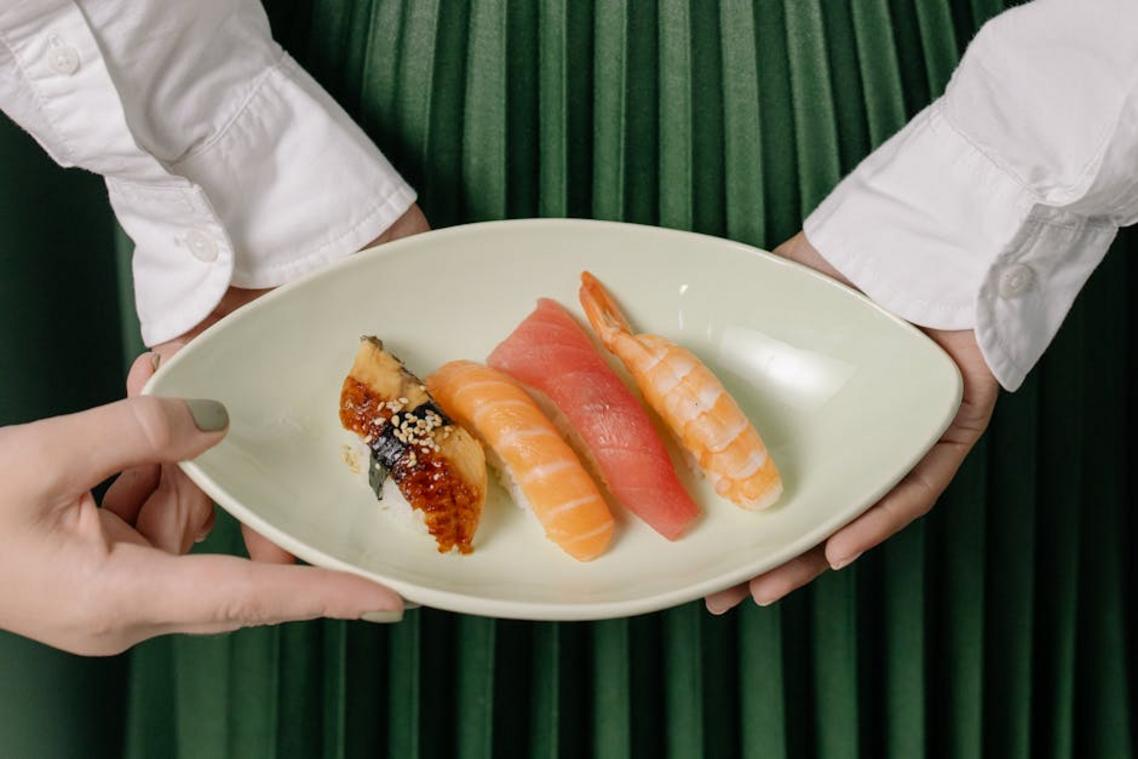
Great sushi isn’t just about the fish; rather, it’s the harmony of its accompaniments. Some argue these extras are optional (just dunk and go, right?). However, understanding their role elevates every bite.
-
Nori (Seaweed): Look for sheets that are dark, uniformly colored, and crisp. If it feels leathery, it’s past its prime. Lightly toast it over a low flame for a few seconds to intensify aroma and snap. Pro tip: a quick pass over heat revives slightly stale nori.
-
Wasabi: True wasabi root—Wasabia japonica—is freshly grated and subtly sweet, while most pastes blend horseradish and mustard powder (Smithsonian Magazine). Use sparingly; it should highlight fish, not wage war on it.
-
Gari (Pickled Ginger): Contrary to popular belief, it’s a palate cleanser between bites, not a topping.
-
Shoyu (Soy Sauce): Choose naturally brewed varieties. Dip the fish side, not the rice, to prevent crumbling and oversalting.
Mastering these sushi ingredients and techniques makes each piece sing (like a perfectly timed scene in Jiro Dreams of Sushi).
The Craft: Fundamental Rolling and Forming Techniques
Setting Up Your Station
First things first, organization is everything. A bamboo rolling mat (makisu) gives structure and control, while a sharp knife (yanagiba is ideal, but a sharp chef’s knife works) ensures clean cuts instead of squashed rolls. Keep a bowl of vinegared water (tezu) nearby—this prevents rice from clinging to your fingers like it’s staging a protest. Many guides skip this mise en place (French for “everything in its place”), but pros know setup determines results.
Making Maki Rolls
Next, place nori shiny-side down. Spread a thin, even layer of rice, leaving a half-inch border at the top. Overloading is the rookie mistake (we’ve all built a burrito-sized “sushi” once). Add fillings in a neat line, then lift the makisu and roll forward, applying gentle, even pressure to create a tight cylinder. Structure matters: loose rolls fall apart; overly tight ones squeeze fillings out.
Forming Nigiri
Meanwhile, shape rice into a small oblong mound in your palm. With a dab of wasabi, press sliced fish on top using two fingers—firm but delicate. Think confident handshake, not wrestling grip.
Home Kitchen Hack: For pristine slices, wipe your blade with a damp cloth between cuts. Pro tip: slice in one smooth pull—sawing ruins presentation.
Bring Sushi Night to Life in Your Own Kitchen
You came here wanting to understand how to make better sushi at home—without the frustration of mushy rice, uneven rolls, or bland flavor. Now you know what truly makes the difference: balanced seasoning, proper rice texture, clean slicing, and thoughtful flavor pairings.
The biggest pain point for most home cooks isn’t effort—it’s technique. When your rolls fall apart or your flavors taste flat, it can feel discouraging. But with the right approach and a few consistent habits, sushi night can go from stressful to impressive.
Here’s your next step: practice one roll at a time, focus on precision, and refine your knife skills and rice preparation before experimenting with complex combinations. Mastery comes from repetition—not rushing.
If you’re ready to elevate your home cooking with clear, no-fluff culinary guidance and proven kitchen hacks, start exploring more of our step-by-step breakdowns today. Join thousands of home cooks who trust our expert tips to turn everyday meals into restaurant-worthy experiences—your next standout sushi spread starts now.