From the moment produce is harvested to the second it lands on your plate, your food travels through an intricate, technology-driven system few of us ever see. What seems like a simple farm-to-table journey is actually a vast, data-powered network coordinating growers, processors, distributors, and retailers across continents. In this article, we unpack the modern food supply chain, breaking it down into its core components, the innovations that keep it moving, and the challenges it faces today. By the end, you’ll understand—and appreciate—the sophisticated system that protects the freshness, safety, and variety of the food you enjoy every day.
The Anatomy of the Modern Food Supply Chain
By exploring the intricate journey of our food from farm to table, we can better appreciate how quick and delicious meal solutions, like the fast brunch recipes from Fhthfoodcult, bring the freshest ingredients to our plates in no time – for more details, check out our Fast Brunch Recipes Fhthfoodcult.
I still remember standing in a cavernous produce warehouse at 4 a.m., watching forklifts zip past like extras in a Fast & Furious sequel (only with more bananas). It was my first real glimpse into how the modern food supply chain actually works—and how many invisible hands touch your dinner before it hits the plate.
1. Producers to Processors
It all starts on farms and ranches. Producers grow or raise raw agricultural goods—wheat, cattle, spinach. Processors then transform them into consumer-ready products. Wheat becomes flour through milling (grinding grain into powder), cattle are butchered into cuts, and vegetables are flash-frozen—rapidly chilled to preserve texture and nutrients (USDA). Without processing, most food simply wouldn’t last long enough to travel.
Some argue local-only sourcing makes processing hubs unnecessary. In theory, sure. In practice, large-scale processing ensures safety standards and consistent supply year-round.
2. The Role of Centralized Distribution Hubs
Next come distribution hubs—massive facilities where goods from thousands of suppliers are aggregated (combined and sorted) for efficient shipping. This consolidation lowers transportation costs and reduces delivery times. Critics say centralization creates bottlenecks. That’s true during disruptions, but decentralizing everything would raise prices dramatically (World Bank).
3. The Cold Chain Imperative
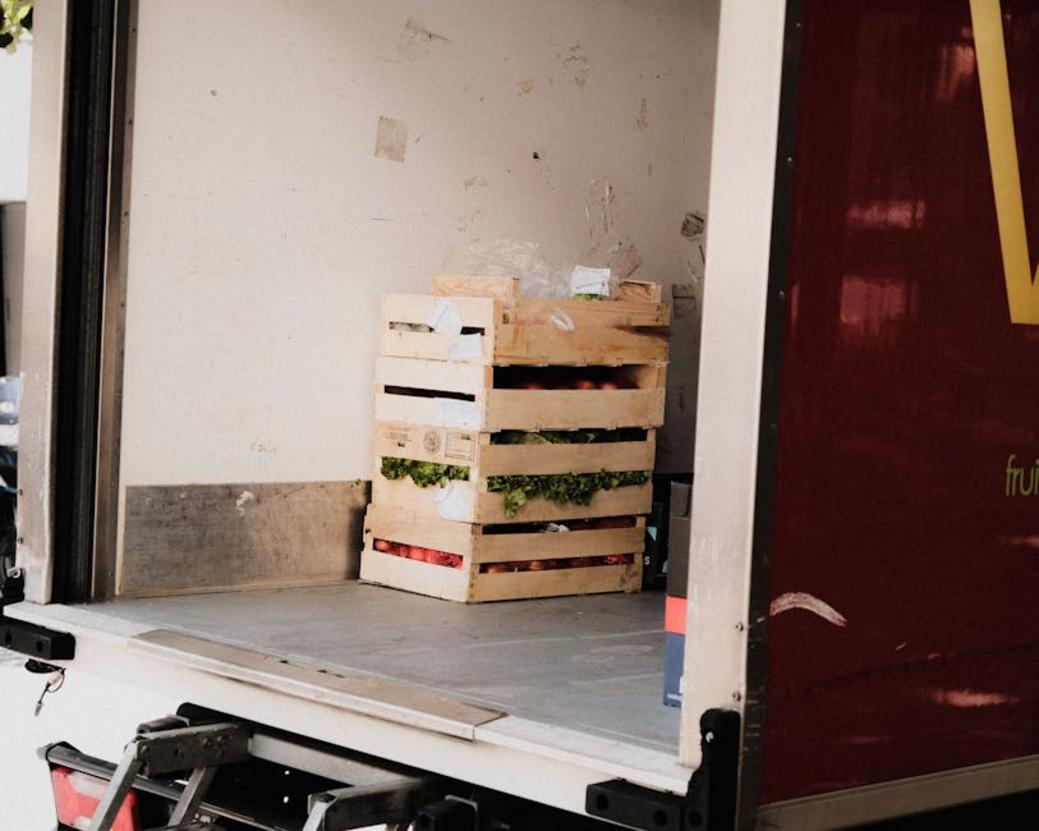
Perishables rely on the cold chain—a temperature-controlled system spanning refrigerated trucks, cargo ships, and warehouses. Even a brief temperature spike can spoil dairy or seafood. (Pro tip: If ice cream is rock-solid, the cold chain likely held.)
4. Retail and Food Service Networks
Finally, retailers and restaurants use just-in-time (JIT) delivery—ordering small, frequent shipments to reduce waste. It keeps lettuce crisp and storage lean. When it works, it’s seamless. When it doesn’t? Empty shelves remind us how interconnected everything really is.
Technology Powering Today’s Food Journey
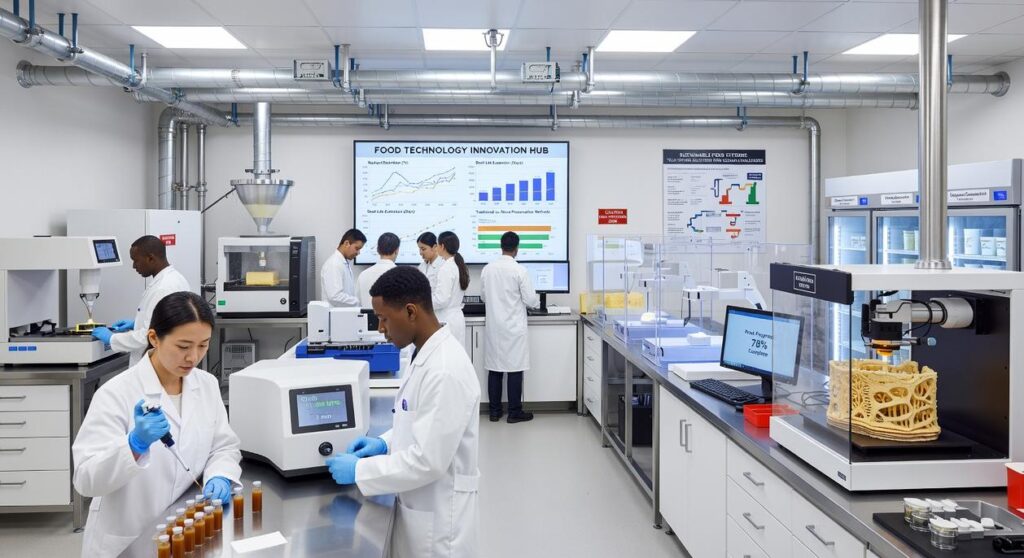
From farm to fork, today’s modern food supply chain runs on more than trucks and timers. It runs on data, robotics, and intelligent systems designed to move food faster, safer, and smarter.
Warehouse Automation: Speed Meets Precision
Robotics and Automated Guided Vehicles (AGVs)—self-navigating machines that move goods without human drivers—now handle sorting, packing, and palletizing with near-millimeter accuracy. These systems reduce labor costs while increasing throughput, meaning your fresh berries spend less time sitting in storage and more time heading to your table. (Think less “traffic jam,” more choreographed dance.) The benefit? Fewer errors, faster fulfillment, and ultimately fresher products.
Predictive Analytics & AI: Smarter Decisions in Real Time
Predictive analytics uses historical data and machine learning algorithms—systems that improve automatically through experience—to forecast demand. Retailers can stock exactly what shoppers want before they even ask. AI also optimizes delivery routes, cutting fuel use and emissions while reducing spoilage from delays. One key advantage:
- Fewer stockouts and less food waste, protecting both profits and freshness.
Blockchain for Unprecedented Traceability
Blockchain is a secure, unchangeable digital ledger that records every transaction. In food logistics, it tracks items from origin to shelf. If contamination occurs, companies can isolate affected batches in minutes instead of days, dramatically improving food safety and consumer trust.
IoT Sensors in Transit: Freshness Under Watch
Internet of Things (IoT) sensors monitor temperature, humidity, and location in real time. For sensitive goods like seafood or dairy, even small temperature swings matter. Continuous monitoring ensures quality stays intact—because no one wants surprise “extra-aged” milk.
Solving the Biggest Hurdles in Food Distribution
The journey from farm to fork often resembles a relay race where someone drops the baton. Food waste—meaning edible food lost during storage or transport—accounts for roughly 14% of global production before it even reaches stores (FAO). In other words, imagine cooking dinner and tossing one out of every seven plates straight into the trash. However, solutions are gaining traction. Dynamic pricing apps, which automatically discount near-expiry items, act like last-call announcements for groceries. Improved demand forecasting—using data to predict buying patterns—helps suppliers ship smarter, not just faster (pro tip: better data beats bigger warehouses).
Meanwhile, the sustainability question looms large. The carbon footprint, or total greenhouse gas emissions tied to distribution, turns the modern food supply chain into a fleet of invisible tailpipes. Critics argue global trade keeps food affordable year-round—and they’re right. Yet electric delivery fleets, route optimization software, and compostable packaging prove efficiency and ecology don’t have to be rivals (think Tesla meets farmers market).
As a result, regional food hubs are rising. These decentralized networks connect nearby producers with local buyers, shortening supply chains like trimming excess scenes from a blockbuster. They boost freshness, resilience, and community wealth. For more on evolving consumer habits, explore top culinary trends shaping home cooking in 2026.
The Next Wave: What’s Changing How We Eat
Direct-to-Consumer (D2C) models are like farmers setting up a stall in your living room. Instead of winding through the modern food supply chain, meal kits and online farm stands travel a straight line from soil to supper. It’s farm-to-doorstep, cutting out middle aisles and middlemen (and those impulse candy bars).
- Pro tip: check sourcing transparency before subscribing.
Last-mile delivery innovations work like pizza on turbo mode. Autonomous vehicles, drones, and urban micro-fulfillment centers act as neighborhood pantries with jetpacks, shrinking hours into minutes. Convenience becomes the new culinary currency today.
A Smarter, More Connected Global Kitchen
You set out to understand how your food travels from farm to table, and now the journey is clearer than ever. The modern food supply chain is no longer an abstract concept—it’s a highly coordinated, data-driven network working behind the scenes to deliver freshness, safety, and global flavors to your kitchen. What once felt complex and distant is now a story of precision and connection. The next time you prepare a meal, pause and appreciate the invisible system that made it possible. Use that awareness to choose ingredients more intentionally and cook with greater confidence and curiosity.