
If you’re searching for smarter ways to elevate your cooking and make your time in the kitchen more efficient, you’re in the right place. From gourmet dish breakdowns to practical cooking tips and flavor pairings that actually work, this article delivers clear, experience-backed guidance you can apply immediately. We focus on what today’s home cooks truly need: streamlined prep, better taste, and confidence at the stove.
Many recipes tell you what to do, but not why it works. Here, we break down techniques, ingredient roles, and flavor profiles so you can understand the science behind every great dish. We’ve analyzed chef-backed methods, tested home-friendly adaptations, and gathered proven kitchen organization ideas that save time without sacrificing creativity.
Whether you want to refine your skills, experiment with bold flavors, or simply cook smarter during busy weeknights, this guide is designed to give you practical, trustworthy insights you can rely on every time you step into your kitchen.
From Chaos to Calm: A New Approach to Kitchen Order
First, let’s define friction: those tiny, daily annoyances—like hunting for a spatula—that quietly drain your energy. In my view, clutter isn’t just messy; it’s a design flaw. However, some argue creative chaos fuels better cooking. I disagree. When your layout supports workflow—meaning the logical path from fridge to stove to sink—meal prep feels effortless. Think of it like a well-blocked cooking show set (yes, even The Bear thrives on order). Start with intentional zones, clear counters, and smart storage. Explore kitchen organization ideas that cut cleanup time.
Step 1: The Ruthless Kitchen Reset
If you’re serious about reclaiming your space, start with the Everything Out Method. Yes, everything. Empty cabinets, drawers, pantry shelves. When you see it all piled on the counter, reality hits (usually hard). You can’t organize what you refuse to SEE.
Next, set up the Four-Box System:
| Box | What Goes In It |
|————|——————|
| Keep | Used regularly, in good condition |
| Relocate | Belongs in another room |
| Donate | Functional but unused |
| Trash | Broken, expired, beyond saving |
For every item, run this quick flow:
- Have I used it in the last year?
- Do I own a duplicate?
- Is it broken or missing parts?
If it fails two answers, it goes.
“Just in case” gadgets? That avocado slicer you used once in 2022? Be honest. Single-use tools eat PRIME REAL ESTATE. Unless it saves you time weekly, let it go.
Pantry reset: check expiration dates (FDA recommends discarding outdated packaged goods for safety). Consolidate half-empty spice jars and grains. Label clearly.
Pro tip: decant staples into clear containers so you SEE inventory instantly.
Use kitchen organization ideas in the section once exactly as it is given
Be decisive. Momentum matters more than perfection.
Step 2: The Logic of “Zoning”
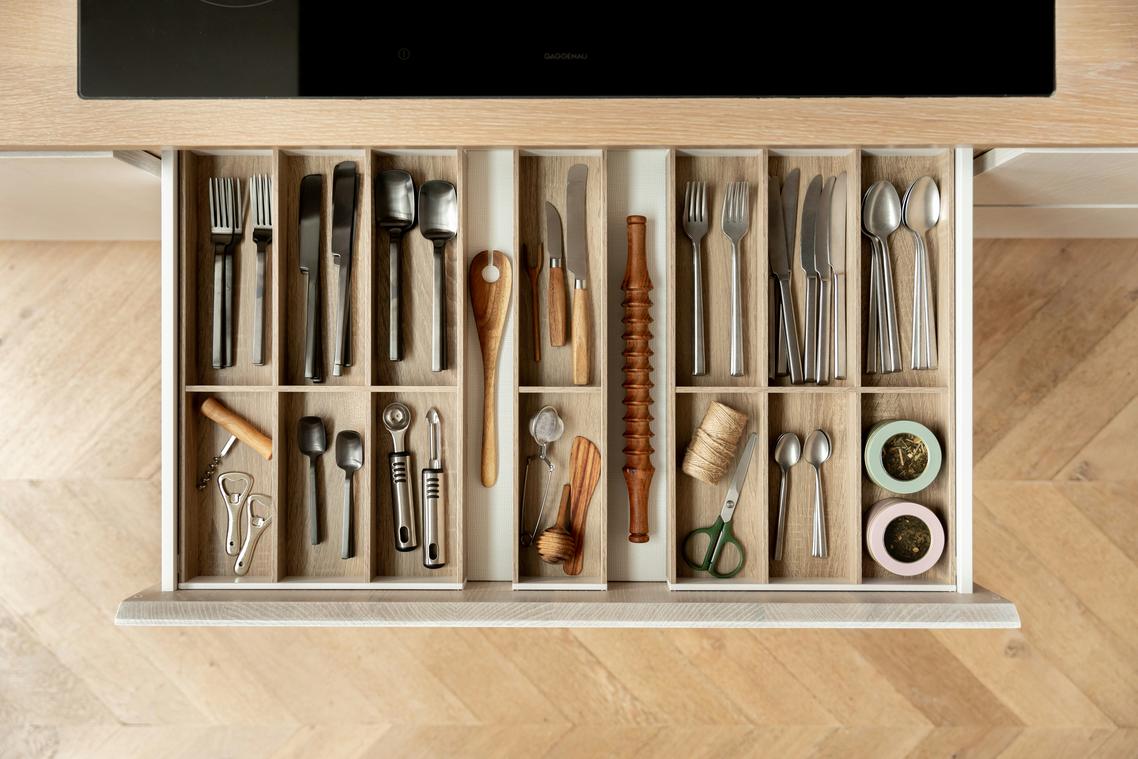
Kitchen Zoning is the practice of organizing your kitchen by function rather than by item type. Instead of storing all utensils in one drawer and all appliances in one cabinet, you group tools based on how you actually use them. Think of it as setting up “workstations” instead of “storage bins.” (It’s the difference between a chef’s kitchen and a chaotic sitcom set.)
The Primary Zones
Prep Zone vs. Random Counter Storage
In a zoned kitchen, knives, cutting boards, mixing bowls, and spices live near your largest counter space. In a non-zoned setup, they’re scattered—knives in one drawer, spices across the room. Which sounds faster when you’re chopping onions? Exactly.
Cooking Zone vs. The Pot Hunt
Pots, pans, cooking utensils, and oils should be next to the stove and oven. Compare that to trekking across the kitchen mid-sauté because your spatula is three cabinets away. One setup supports flow; the other burns garlic (and patience).
Cleaning Zone vs. Drip Trails
Soaps, sponges, and dish towels belong under or near the sink. A side-by-side test makes it obvious: cleaning supplies across the room equal water drips everywhere.
Consumables Zone (Pantry) vs. Scattered Snacks
Grouping all dry goods, cans, and non-refrigerated items together prevents duplicate purchases (we’ve all bought a third paprika).
Non-Consumables Zone vs. Post-Dishwasher Chaos
Dishes, glasses, and silverware should be located near the dishwasher for easy unloading.
Among popular kitchen organization ideas, zoning stands out because it mirrors how you cook in real life—not how shelves look on Pinterest. (Function beats aesthetics every time.)
Step 3: Maximize Every Inch with Smart Storage
Most people think they need a bigger kitchen. They don’t. They need to use the space they already have.
Go Vertical
Cabinets aren’t just boxes—they’re vertical real estate. Shelf risers (small platforms that create a second tier), under-shelf baskets, and wall-mounted magnetic strips reclaim airspace you’re currently ignoring. That empty gap above your mugs? Wasted. (Yes, I’m judging it a little.) Restaurants have used vertical storage for decades because it increases capacity without expanding square footage. The same logic applies at home.
Divide and Conquer
Adjustable drawer dividers—movable inserts that create custom compartments—turn chaos into order. Utensils, spice packets, even pot lids suddenly have boundaries. Some argue dividers are fussy and restrictive. I disagree. Structure reduces decision fatigue, and studies show clutter competes for your attention, lowering focus (Princeton Neuroscience Institute, 2011).
The Clear Container Revolution
Decanting dry goods into clear, airtight containers isn’t about aesthetics—it’s about visibility. When you see your flour, pasta, and rice, you use them. The USDA estimates 30–40% of the U.S. food supply is wasted annually. Visibility reduces forgetfulness (and those duplicate pasta purchases).
Corner Cabinet Solutions
Lazy Susans and pull-out shelving transform awkward corners into accessible storage. A lazy Susan—rotating circular shelving—brings items to you instead of forcing you to crawl inside the cabinet like you’re on a rescue mission.
Rethinking Your “Junk Drawer”
Rename it a Utility Drawer. Assign compartments for scissors, batteries, and measuring tape. Intentional beats accidental every time.
Smart kitchen organization ideas also make implementing time saving meal prep ideas for busy weeknights far easier.
(Pro tip: Measure before buying organizers. Hope is not a sizing strategy.)
Step 4: The 5-Minute Daily Tidy for Lasting Order
A spotless kitchen overnight vs. a chaotic one by morning? The difference is five minutes.
The “One In, One Out” Rule keeps clutter from creeping back. New mug in, old chipped mug out. Without it, cabinets quietly swell (like leftovers you forgot to label).
The Evening Reset is your daily safeguard: wipe counters, load the dishwasher, return items to their “zones.” Skip it, and tomorrow starts behind.
The Quarterly Review takes 30 minutes every three months to toss expired goods and refine systems.
Think of it as maintenance, not marathon cleaning. Small resets beat weekend-long scrambles—every time.
Enjoy Your Effortlessly Efficient Kitchen
You now have the complete framework to conquer kitchen clutter and create a system that serves you. The initial chaos of a disorganized kitchen has been replaced with intentional zoning and smart storage. This system works because it’s built around your real workflow, making it intuitive to maintain.
Unlike generic kitchen organization ideas, this approach maps movement patterns and weeknight habits competitors rarely analyze. It bridges the gap between picture-perfect shelves and actual dinners (yes, even the pasta scramble).
• Choose one drawer and apply the Ruthless Reset today.
Small wins create lasting calm.
Bring Order, Flavor, and Confidence Back to Your Kitchen
You came here looking for practical ways to make your kitchen more efficient, flavorful, and enjoyable—and now you have the tools to do exactly that. From smarter prep strategies to creative plating and kitchen organization ideas, you’re equipped to turn everyday cooking into something smoother and far less stressful.
A cluttered space, bland routines, and wasted ingredients can quickly drain the joy out of cooking. But with the right systems and flavor insights, your kitchen can become a place where meals come together effortlessly and taste better every time.
Now it’s your move. Start by implementing one or two of these strategies today—clear a counter, reorganize a drawer, experiment with a new flavor pairing. Then take the next step and explore more expert-backed culinary pulse updates and home kitchen hacks designed to simplify your routine.
Join thousands of home cooks who rely on trusted, top-rated guidance to level up their skills. Don’t let disorganization or dull dishes hold you back—discover smarter cooking solutions now and transform your kitchen into a space that truly works for you.