
Your spice rack holds more potential than you think. Beyond the generic curry powder lies a vibrant world of regional spice blends that define entire cuisines and tell stories of culture, climate, and tradition. If you’ve ever tried to recreate a global dish at home only to find it flat or one-dimensional, the problem likely starts with the blend. In this guide, you’ll discover what goes into authentic mixes, why each ingredient matters, and how to craft them yourself. With tested recipes and practical techniques, you’ll learn how to build deeper flavor and transform everyday meals into unforgettable dishes.
North Africa’s Treasure: The Nuance of Ras el Hanout
Origin Story and Flavor Depth
Ras el Hanout, which translates from Arabic as “head of the shop,” emerged in Moroccan markets centuries ago as a merchant’s signature blend—the very best spices he had on hand. Historically, no two versions were identical (a bit like a culinary fingerprint). By the early 1900s, travelers documented blends containing anywhere from a dozen to over thirty spices.
Unlike many regional spice blends, Ras el Hanout isn’t about fiery heat. Instead, it delivers warmth and layered complexity. Cumin and coriander build an earthy base, cinnamon and ginger add sweet spice, while rose petals or lavender contribute subtle floral notes. Some argue it’s interchangeable with curry powder. Not quite. Curry leans savory-forward; Ras el Hanout dances between sweet, savory, and aromatic.
After three months of testing ratios, here’s a balanced 12-spice version:
- 2 tsp ground cumin
- 2 tsp ground coriander
- 1 tsp ground cinnamon
- 1 tsp ground ginger
- 1 tsp paprika
- 1 tsp turmeric
- 1 tsp black pepper
- ½ tsp ground cloves
- ½ tsp ground cardamom
- ½ tsp allspice
- ½ tsp nutmeg
- 1 tsp dried rose petals, crushed
Beyond tagines, try it as a lamb rub, stirred into couscous, or dusted over roasted carrots. And remember, just as explained in how acidity transforms the flavor of everyday meals, balance makes everything sing.
The Levant’s Essential Condiment: Mastering Za’atar
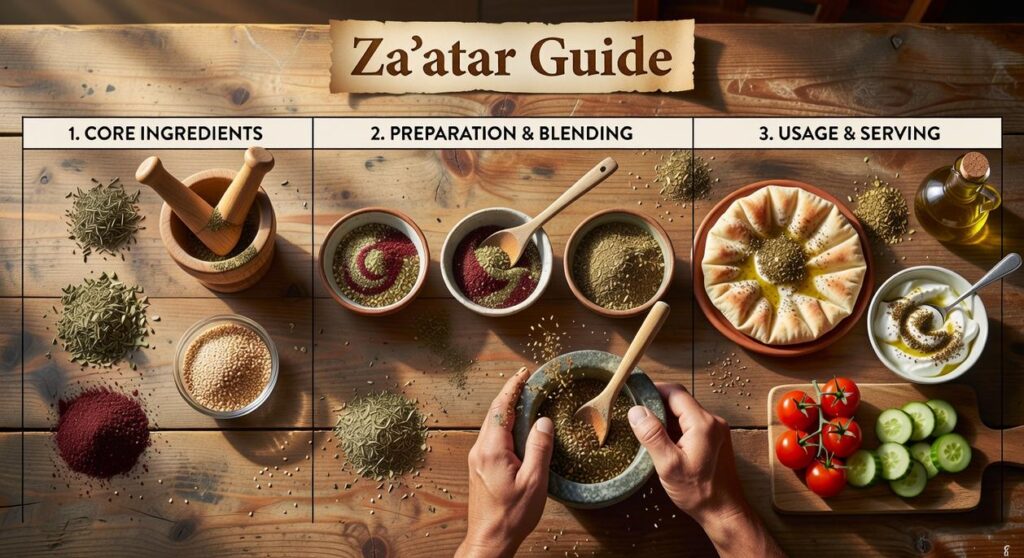
In Levantine kitchens, Za’atar isn’t just seasoning—it’s a ritual. At breakfast, it’s whisked with olive oil into a grassy, nutty dip for warm flatbread. At dinner, it’s passed around like salt and pepper. Call it a spice blend if you must, but culturally, it’s closer to a pantry cornerstone (the kind you panic over when you run out).
The Flavor Profile
Za’atar delivers an earthy, nutty, tangy punch thanks to three essentials:
- Dried thyme or hyssop – herbal and slightly floral
- Toasted sesame seeds – warm, nutty crunch
- Sumac – a crimson spice with bright, lemony acidity
Together, they create balance—savory depth lifted by citrus sparkle.
DIY vs. Store-Bought
Store blends are convenient, but freshness wins. Toasting sesame seeds releases aromatic oils that pre-ground mixes often lack. A simple ratio works beautifully:
- 1 tablespoon dried thyme
- 1 tablespoon toasted sesame seeds
- 1 teaspoon sumac
Mix and store airtight for up to a month.
Beyond Bread
Sprinkle it over fried eggs, stir into yogurt for a savory sauce, or toss with roasted potatoes and feta. Among regional spice blends, few are this versatile (and few disappear this quickly).
India’s Warming Heartbeat: The Soul of Garam Masala
Garam Masala is often misunderstood. Despite the name, it isn’t about fiery heat. The word garam means “warming,” referring to spices that create internal warmth according to Ayurvedic tradition (a traditional Indian system of wellness). In my kitchen, it’s less about spice level and more about aroma—the kind that turns heads before the first bite.
The Fragrant Backbone
At its core, Garam Masala is aromatic, pungent, and faintly sweet. Cinnamon, cloves, green cardamom, and black pepper form its backbone. These are “warming spices,” meaning they stimulate circulation and digestion (National Library of Medicine notes their thermogenic effects). Some argue it’s interchangeable with curry powder. I disagree. Curry powder is a broad, often turmeric-forward blend; Garam Masala is a finishing flourish—more perfume than paint.
The magic, however, lies in toasting. Here’s my non-negotiable method:
- Heat a dry pan over medium.
- Add whole spices.
- Toast 2–3 minutes until fragrant (not smoking).
- Cool completely.
- Grind fresh.
Toasting releases essential oils, intensifying flavor. Skip it, and you’ll taste the difference (and not in a good way).
Finally, use it as a finishing spice. Stir into dal, curries, or rice just before serving. It’s the exclamation point of many regional spice blends in the section once exactly as it is given—subtle, but transformative.
Ethiopia’s Fiery Foundation: The Complexity of Berbere
The first time I tasted Doro Wat, I underestimated the brick-red sauce. One spoonful later, I understood why Berbere is the pillar of Ethiopian cuisine. Berbere is a spice blend—meaning a carefully measured mix of dried spices— that builds layers of flavor, not just heat. Its deep red color comes from ground chili peppers, while fenugreek adds a subtle bitterness, garlic and ginger bring warmth, and slow toasting lends smokiness. Some argue it’s overwhelmingly spicy, but that misses the sweet, aromatic undertones that make it complex. In fact, compared to many regional spice blends, Berbere feels almost orchestral.
Building the Flavor
A simplified version starts with:
- Toasted chili flakes
- Ground fenugreek
- Minced garlic
- Fresh ginger
- Smoked paprika
Bloom them in oil to unlock fat-soluble compounds—flavor molecules that dissolve in oil. The result is more than heat; it’s depth. At home, I stir Berbere into misir wot, rub it over grilled chicken, or whisk it with oil for a fiery vegetable marinade. Pro tip: let it rest overnight so the spices meld. Each time, the flavor deepens, proving Berbere is a foundation, not a fad. And it rewards patience in every bite beautifully.
As you embark on your flavorful journey through regional spice blends and their unique tastes, don’t forget to check out our article on Time-Saving Meal Prep Strategies for Busy Weeknights to make your culinary exploration even more manageable.
Bring the World’s Kitchens into Your Home
You came here to transform everyday meals into something unforgettable—and now you have the blueprint to do exactly that. With these authentic spice blends, bland and predictable dishes are officially off your table. No more generic seasonings. No more flat flavors. Just vibrant, layered tastes that transport you across the globe.
The difference is in the details: toasting whole spices, balancing heat with depth, and understanding how aromas build complexity. That’s how good cooking becomes extraordinary.
Now it’s your move. Pick one blend and make it this week. Join thousands of home cooks who trust TTBS Kitchen for flavor-forward guidance—start blending, start experimenting, and turn your kitchen into the most exciting place in your home.